24/7 emergency response · the Coastal Empire
Mold remediation built for a humid coastal climate
Savannah's heat and humidity make mold the region's most common indoor problem — behind walls, under floors, in HVAC systems and historic crawlspaces. Containment, removal, and fixing the moisture source so it doesn't come back.
What's involved
What we do
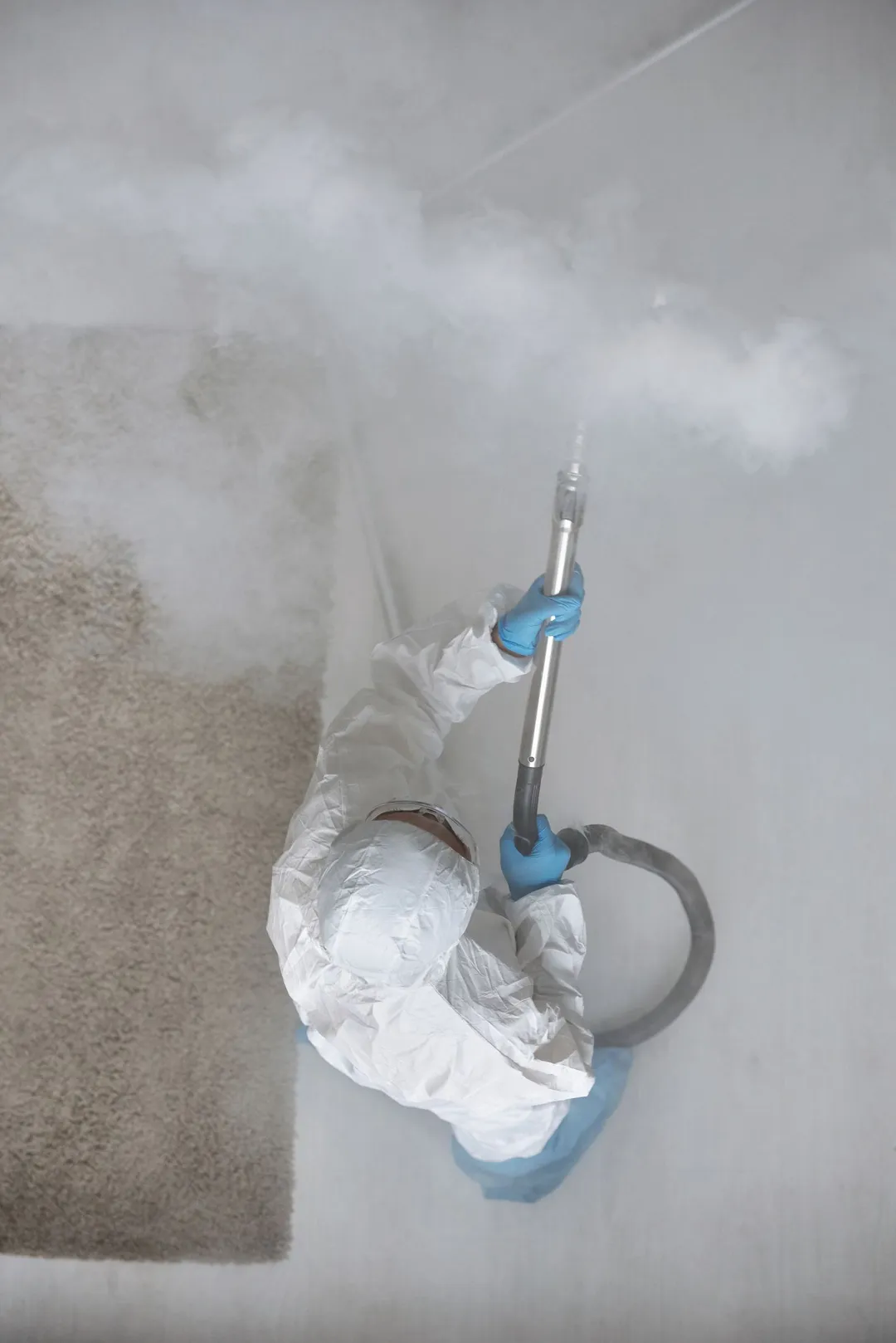
- Containment and HEPA filtration to stop spores spreading during work
- Removal of affected material and treatment of salvageable structure
- Finding and fixing the moisture source — the step that prevents regrowth
- Drying to verified moisture readings, not to a calendar
- A written scope you can read before anyone opens a wall
- Common in historic downtown homes and slab-built coastal construction
Locally, this is the single most-searched restoration service in the Coastal Empire.
We serve Savannah, Pooler, Richmond Hill, Rincon, Garden City, Port Wentworth and the rest of the Coastal Empire. Same-region crews, no long waits for someone to drive in.
See all service areas → What it costs in 2026 →In plain terms
What mold remediation actually involves
Done properly it's a sequence, and skipping steps is why mold comes back. The work area gets sealed off with sheeting and a zippered entry, then put under negative air pressure through a HEPA-filtered scrubber so spores disturbed during removal leave the building instead of drifting into the rest of the house. Porous material that has been colonized — drywall, insulation, carpet pad, sometimes subfloor — comes out, because growth roots into it and cleaning the surface only treats the stain. Structure worth saving is HEPA vacuumed and wiped rather than replaced. Then the moisture source gets fixed, the assembly is dried to verified readings, and only then does anything get closed back up.
What belongs in a written scope
Georgia does not license mold remediation, so nothing stops a company from calling a bleach wipe-down a remediation. The paperwork is where you tell the difference. Before work starts you should be able to read: where the moisture is coming from and how it will be fixed; exactly what material is being removed and to what boundary; how the area will be contained; what the drying target is and how it will be measured; and what happens if opening the wall reveals more than expected. If a quote is a single line and a price, that is not a scope — ask for one, from us or from anyone else you call.
Why coastal Georgia changes the timeline
Drying is a race between the water in your walls and the water already in the air, and around Savannah the air rarely helps. High ambient humidity for most of the year means assemblies give up moisture slowly, so honest drying here often runs longer than the same job inland — the readings decide when it's done, not the calendar. The local building stock adds to it: raised historic homes sit over crawlspaces that stay damp and feed the floor system above them, and slab-built coastal construction traps moisture at the bottom of walls where it isn't visible until the baseboard tells on it. Long cooling seasons keep HVAC systems condensing, which is why so many local mold problems start at an air handler or a duct run rather than a leak.
How it works
A clear process, start to finish
Call or request a callback
Tell us what happened. For water and storm emergencies, the sooner we start, the less damage you're left with.
On-site assessment
We inspect, take moisture readings and photos, and explain what needs to happen — before any work starts.
Mitigate & restore
Extraction, drying, removal, cleaning — the right steps in the right order, documented as we go.
Insurance handled
We format documentation the way adjusters expect and coordinate with your carrier on covered claims.
Straight answers
Mold Remediation questions we hear most
Do I need mold testing, or just removal?
Often just removal. If you can see it and you know where the water is coming from, a test mostly tells you what you already know — the fix is the same regardless of species. Testing earns its cost when you can smell mold but can't find it, when you need to establish the boundary of a hidden problem, or when someone else needs proof: a landlord dispute, a sale, an insurance claim. If you do want verification after the work, hire an independent party for it rather than taking the remediator's word — including ours.
Is it black mold?
You can't tell by looking, and neither can anyone else without a lab — plenty of harmless growth is dark, and some of what people worry about isn't. More useful than the color: how much of it there is, how long it's been wet, and what's feeding it. The response doesn't change either way, which is why we won't price a job on the word "black."
How long does mold remediation take?
A contained closet or a small bathroom wall is often a day or two of work plus drying time. Anything structural, anything involving a crawlspace, or anything where the source repair is itself a project runs longer. The honest answer is that removal is fast and drying is what sets the schedule — and in this climate drying takes as long as the moisture readings say it takes.
Can't I just clean it with bleach?
For a real problem, usually not — surface bleaching lightens the stain while leaving roots in porous material, and it does nothing about the moisture feeding the growth. Remove properly, then fix the source; that's what keeps it gone.
Why does mold keep coming back in the same spot?
Because the moisture source is still active — a slow leak, crawlspace humidity, or condensation. Finding and fixing that source is a standard part of our scope, not an upsell; without it, remediation is temporary by definition.
Does homeowners insurance cover mold in Georgia?
It depends on what caused it, not on the mold itself. Mold following a sudden covered loss — a burst supply line, an appliance failure — is often covered, frequently with a specific dollar cap for mold buried in the policy. Mold from a long-term seep, deferred maintenance, or humidity generally isn't. Read your policy for the mold limit before you assume either way, and document everything from the start.
Do I have to leave the house during the work?
Usually not. Containment exists precisely so the rest of the house stays usable while a room is being worked on. Where it does make sense to stay elsewhere — large affected areas, work across an HVAC system, or someone in the household who reacts badly — we'll say so up front rather than after the sheeting goes up.
Is mold dangerous?
Sensitivity varies person to person, and we're not doctors — so we won't fear-sell you. The honest position: ongoing mold growth and musty indoor air aren't something to live with, and the fix is the same either way — remove it and dry out its cause.
Get help fast
Tell us what happened
Water, mold, fire, or storm damage — send a few details and we'll call you back to assess it. For active emergencies, calling is fastest: (912) 244-8866.
- 24/7 emergency response for water & storm emergencies
- We document everything for your insurance claim
- Serving all of the Coastal Empire
What happens when you reach out
- Tell the 24/7 line (or this form) what happened and where — two minutes.
- We call you back fast to talk it through and set the on-site visit.
- Assessment first, in writing — work starts only when you say go.